Let's Talk!


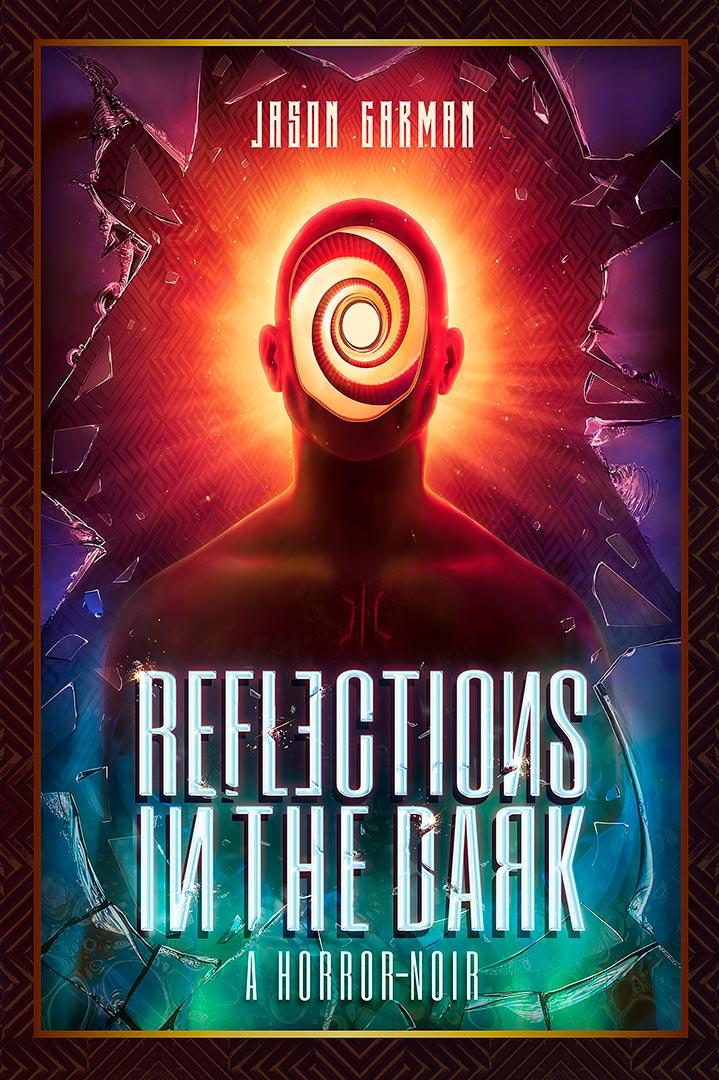
This case study documents the complete book cover design process for a supernatural noir thriller — from client’s brief to final delivery. A full walkthrough of how a professional book cover illustration goes from concept to print-ready files is available to download at the end of the study.
Reflections in the Dark is a supernatural noir thriller set in Chicago written by Jason Garman. Detective Maria Voss and philosophy professor Reed Ashland investigate mirror-related murders that lead them into the Elsewhere Fold, a surreal dimension where memory, identity, and reality collapse into each other.
Think Twin Peaks meets Sam Lake meets Heavy Rain. Lynchian dream logic meets psychological horror.
Jason Garman wanted a horror-noir book cover design that captured the book’s lore and atmosphere — something that would stand out in a saturated market and work equally well as a physical cover and an ebook cover. The cover artwork needed to:
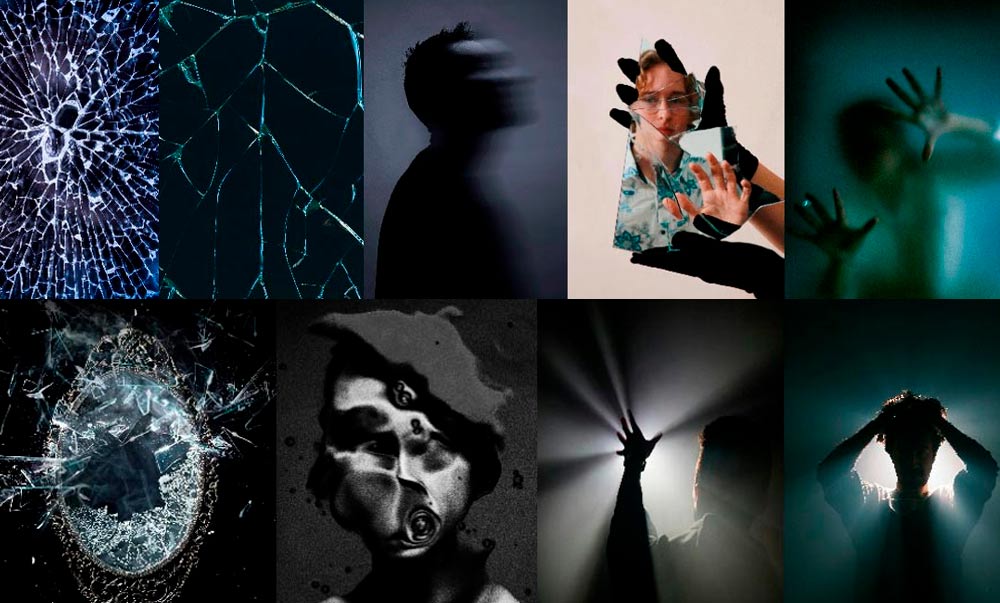
The client sent a brief including the synopsis, a mood board, a music playlist for atmosphere and eventually the full manuscript. After reviewing all materials, the idea was clear: to design a cover to function as an artifact, not just packaging. A visual loop where the book watches you back.
The reader shouldn’t understand the cover immediately. They should distrust it.
As you hold the book, you become part of the image:
This approach to custom book cover design prioritizes concept over decoration. Instead of illustrating plot points, the cover engages with the book’s core themes: identity, surveillance and fractured reality.
Most thriller book cover designs fall into the cliché of being monochrome with elongated sans-serif type fonts such as Futura, usually in red. The story of the book was distinctive enough to ask for a different approach.
Solution: Discard monochrome noir clichés. Pull the palette from Chicago neon streetlights. Use the human figure as a portal, not as a portrait. Keep the genre type fonts to keep genre identity.
Distintive key for the genre: Push chromatic tension
The contrast creates visual unease while maintaining dark values for genre credibility.
The book cover design process involved six phases: exploration, initial sketching, 3D development, matte painting, typography, and pattern design.
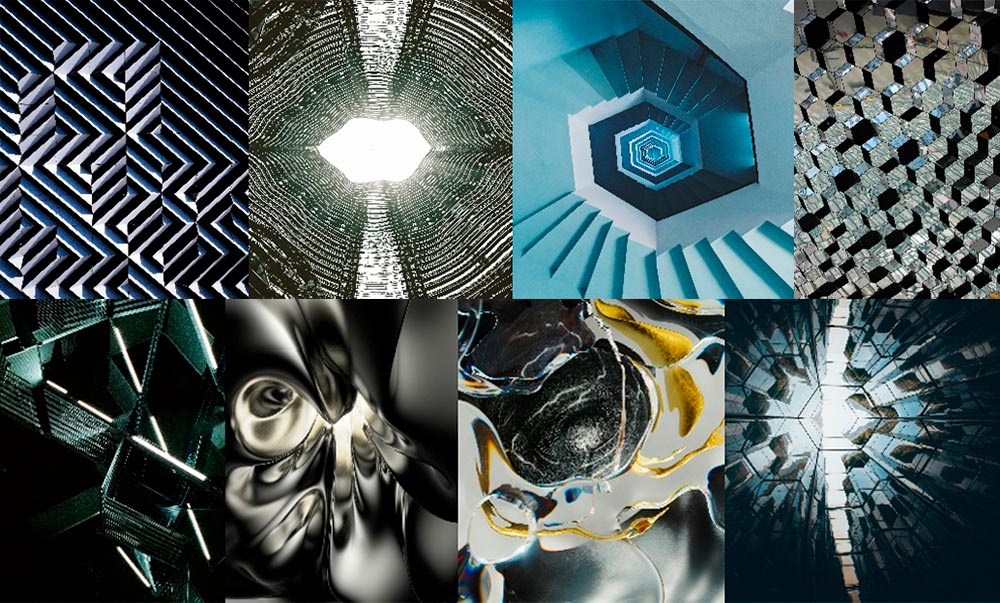
I started by exploring visual references inside the tropes and clichés from supernatural thrillers, identity novels, and noir horror aesthetics — specifically to avoid them.

Most noir book cover designs fall into predictable patterns: Monochromatic grey/black palettes; anonymous silhouettes in fog or rain; cracked glass texture overlays and close-up eyes with reflections. These work, but they flatten what makes a story distinctive.
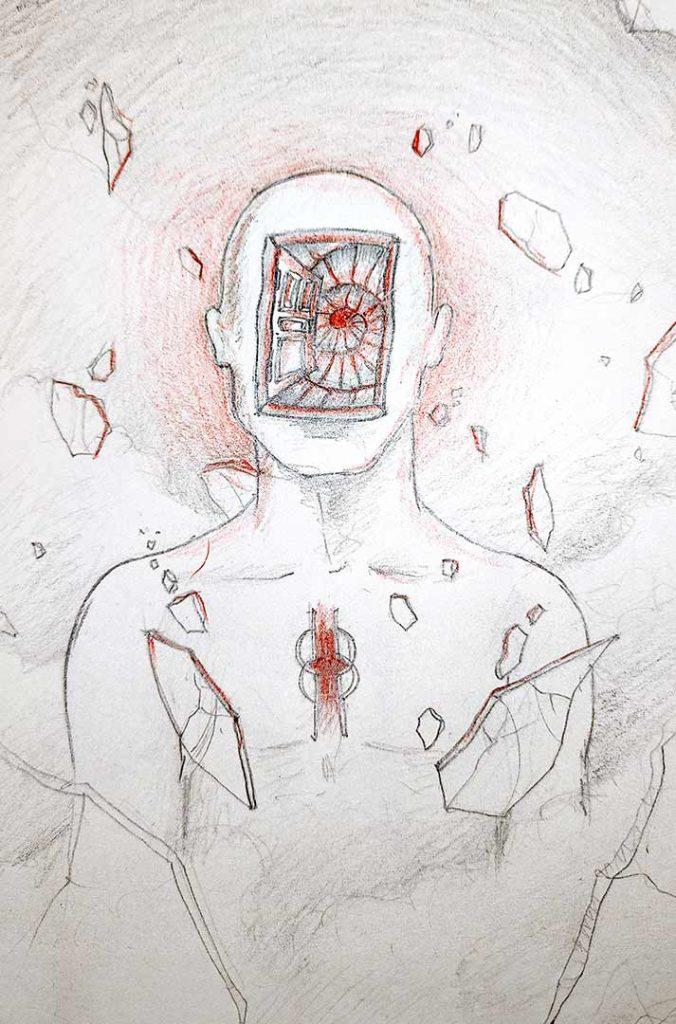
First, I worked through rough sketches to establish the core visual language, alongside a draft of the full layout. The client approved everything with minimum notes. These drawings tested:
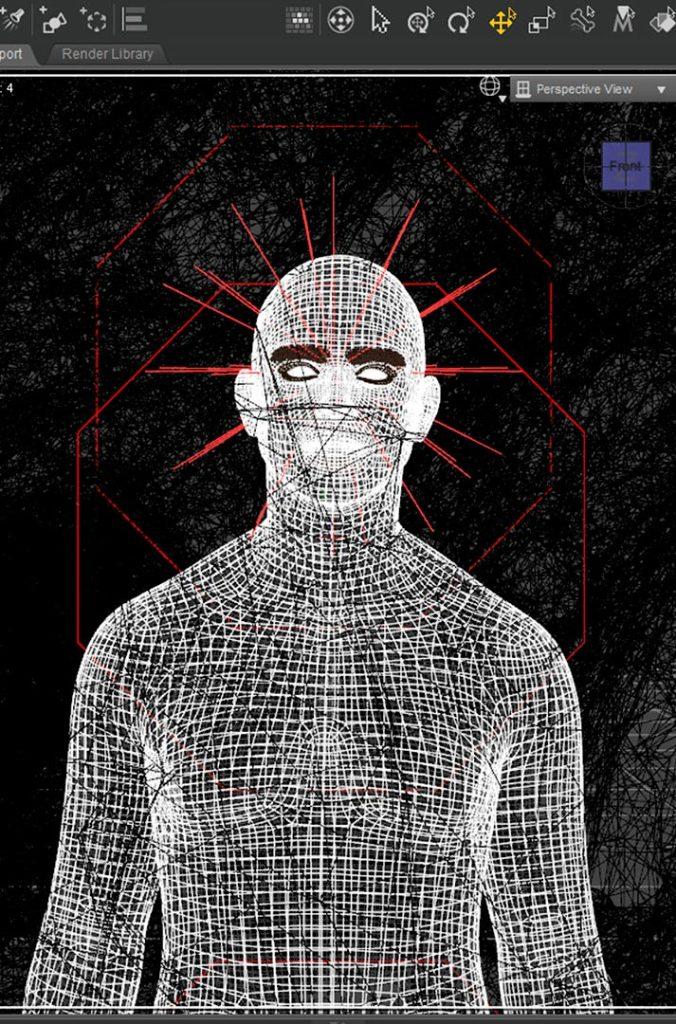
I chose Daz Studio to rig the main figure — total control over pose from day one, fast outcome, and precise control over every technical variable. This is a core part of my digital illustration workflow for complex book cover artwork. It gave me precise control over:
The main 3D proposal was ready fast and approved by the client with no notes.
In Photoshop, new elements were placed using photomontage (staircase, glass, shards). Several overpainting layers define lighting, color balance, atmosphere and homogeneity. Key decisions:
Final touches include a Camera Raw post-processing for color grading and pixel-perfect histogram.
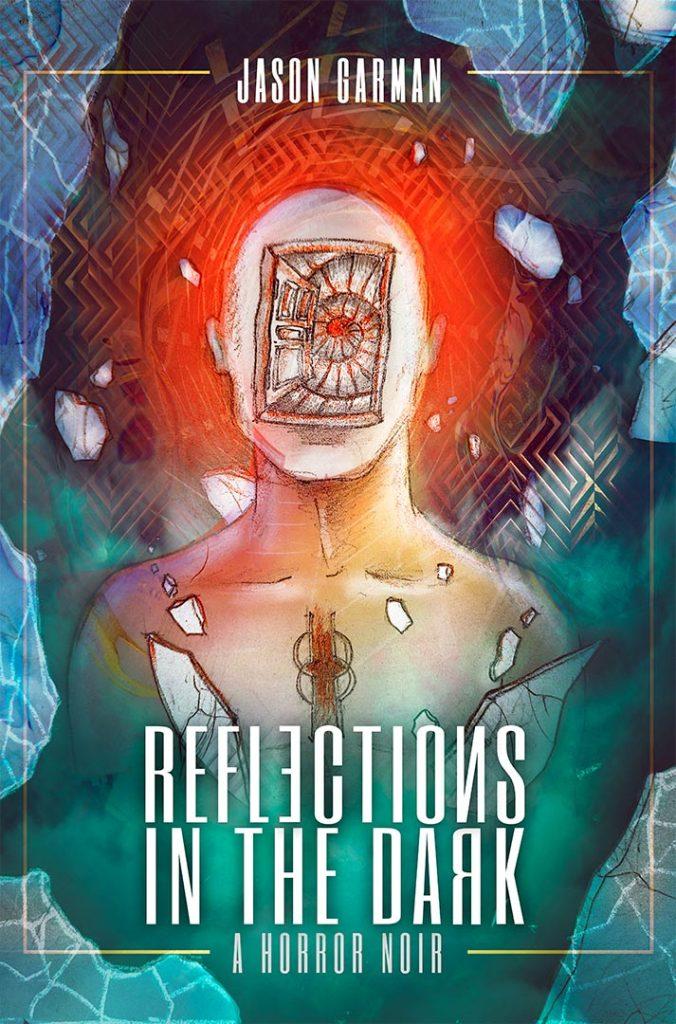
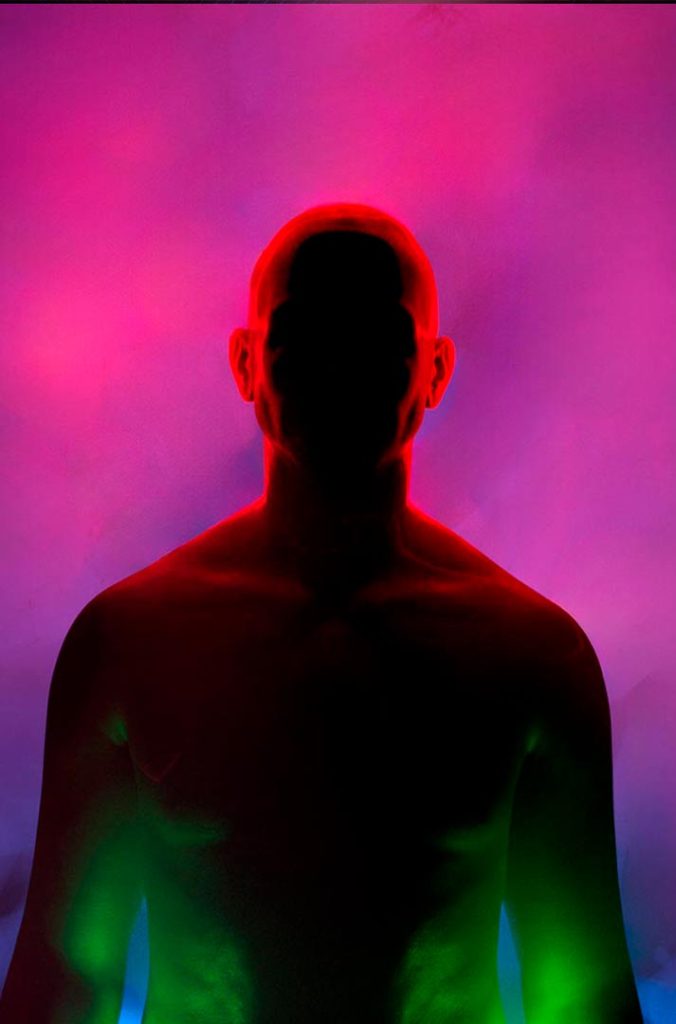
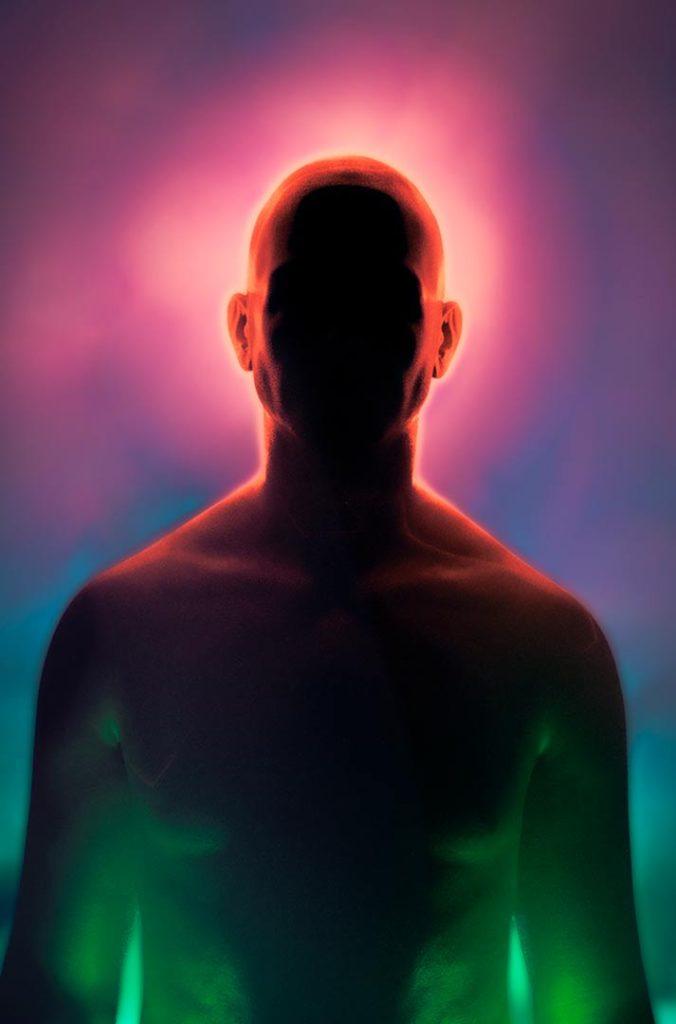
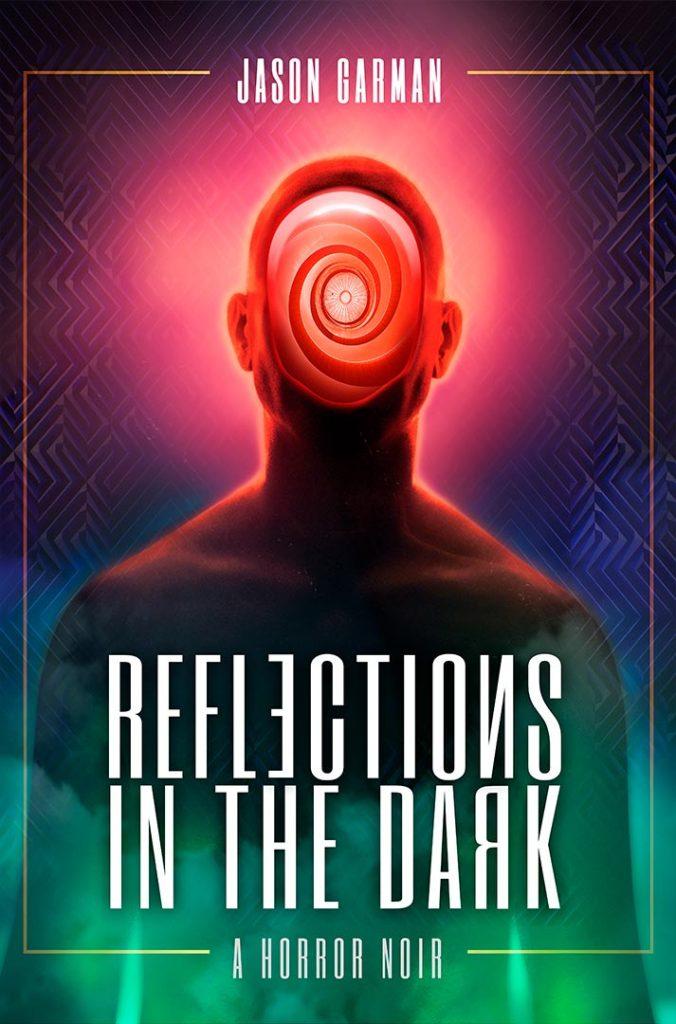
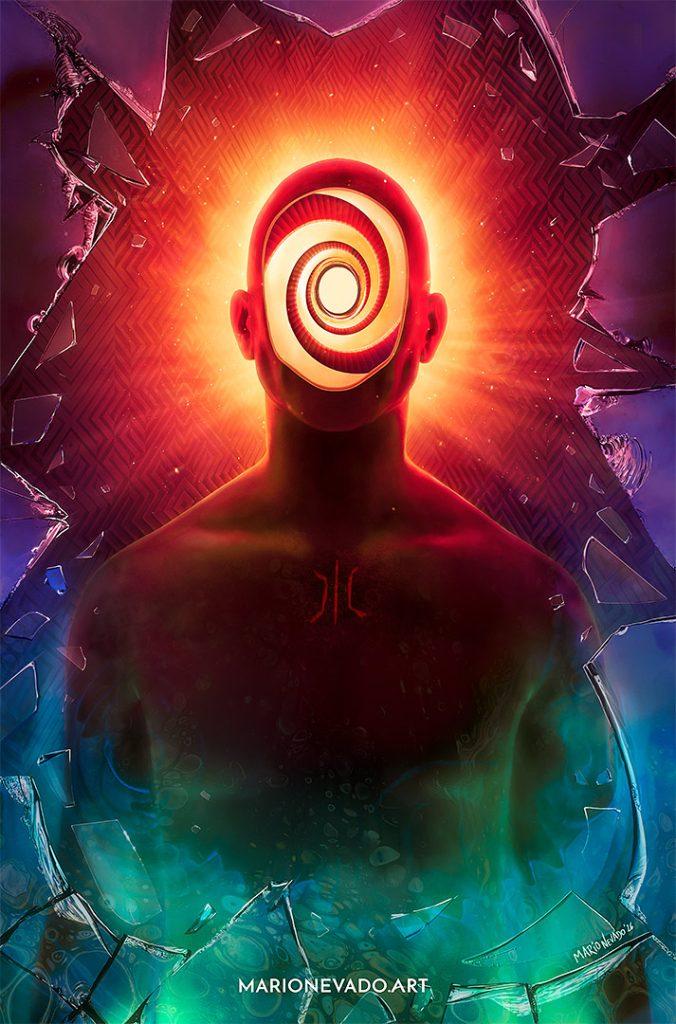
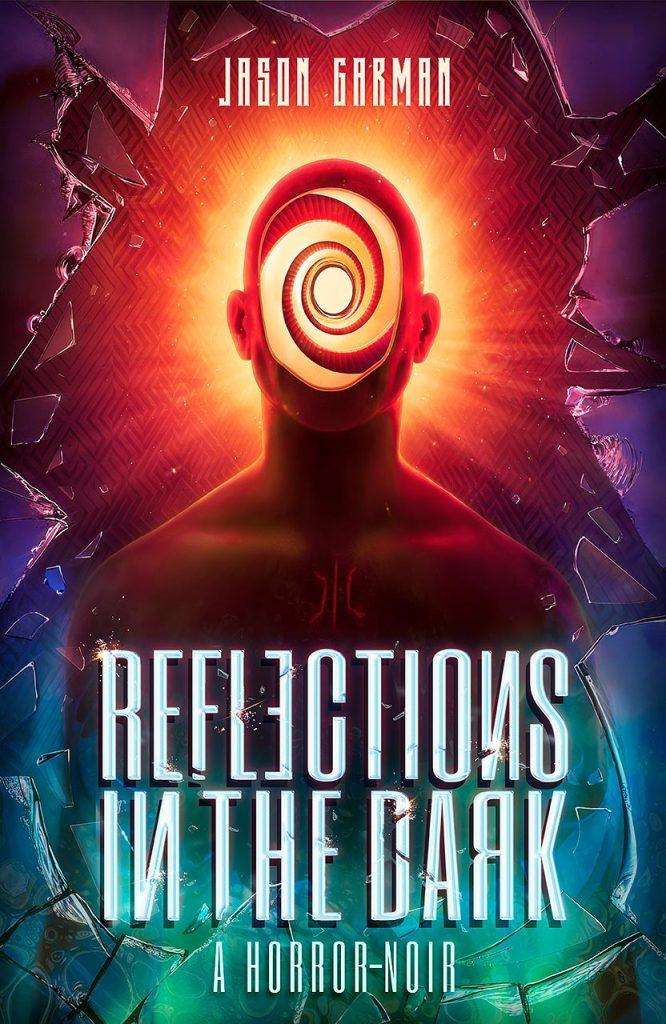

The typography needed to bridge the unconventional book cover artwork with clear genre signaling.
Solution: Treat the title as a breaking neon sign (referencing the Chicago streetlights) using a genre-recognizable font (elongated sans-serif) such as Six Caps.
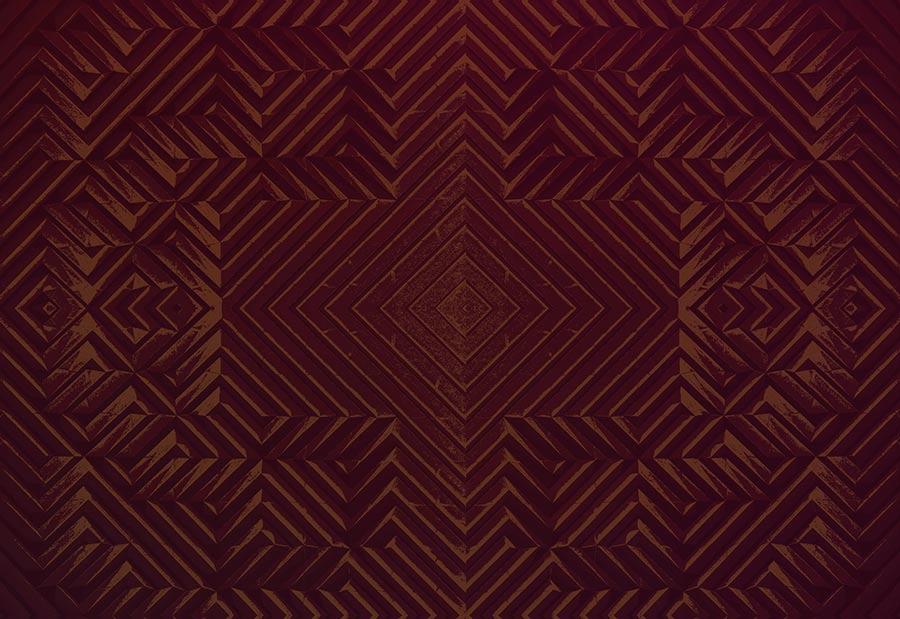
I designed a geometric pattern inspired by Twin Peaks, Control, and The Shining to create visual consistency across all touchpoints. My main goal was to create a design item that could be used as a branding element moving forward. The pattern design:
The final layout extends the book cover illustration beyond the front cover and into the complete book object — front, spine and back working as a single piece. An artifact.
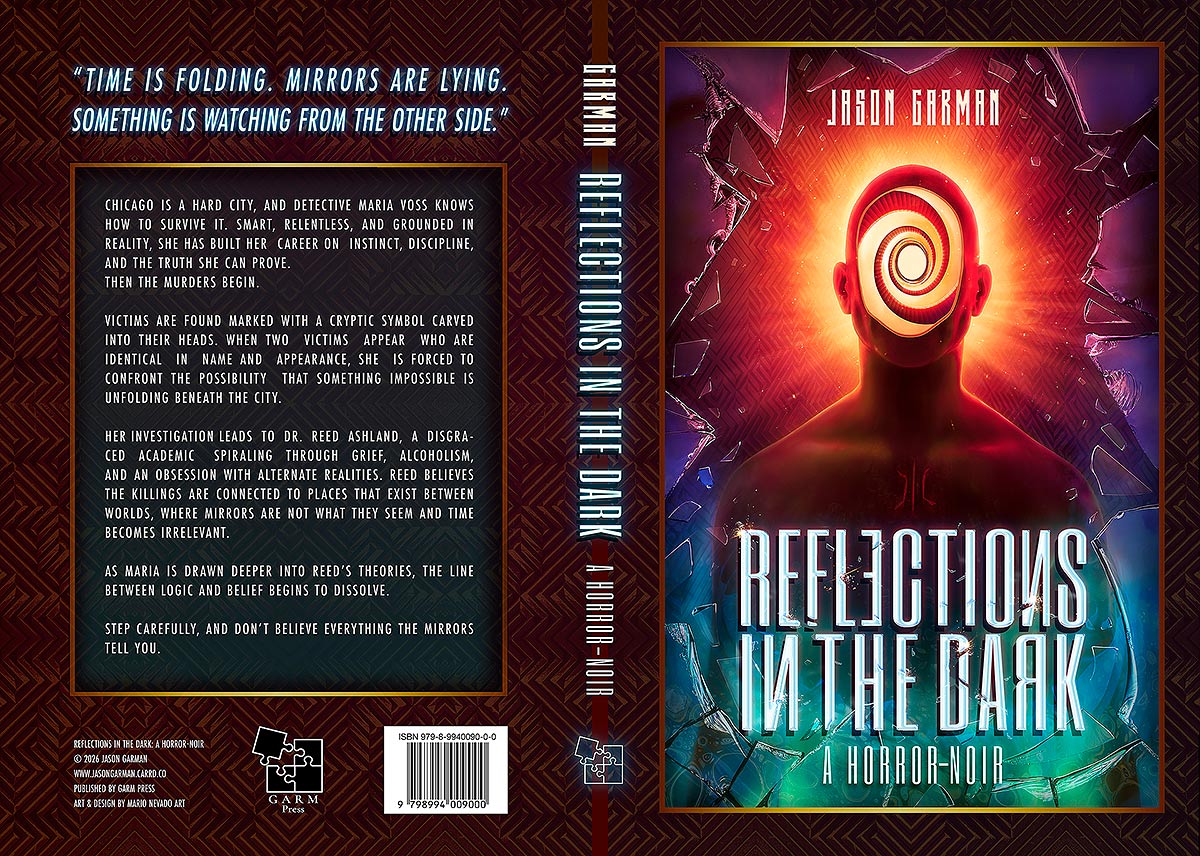
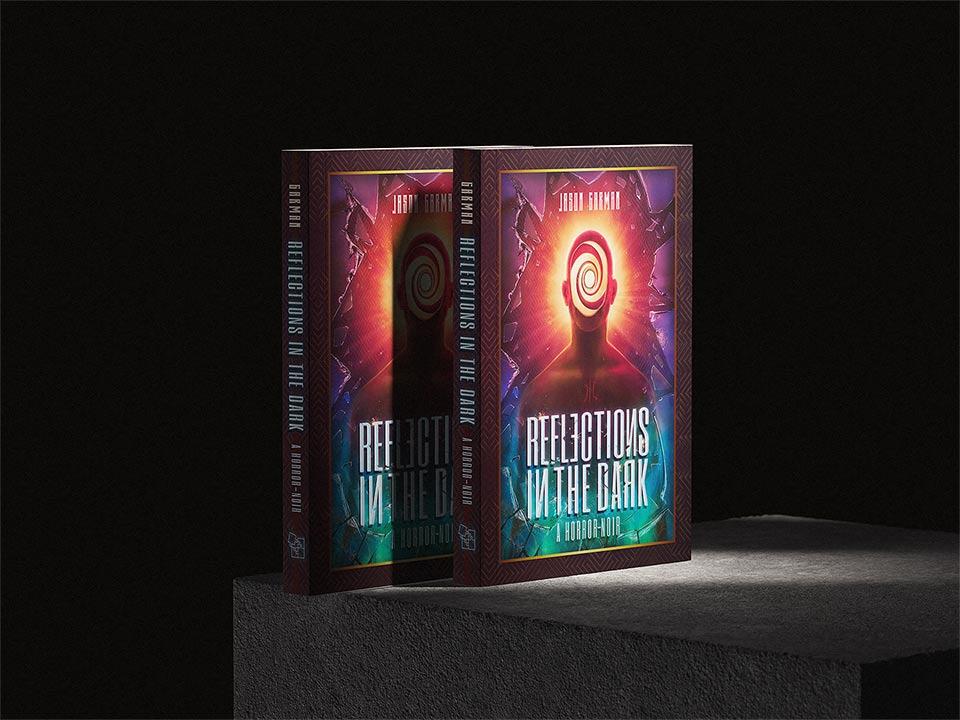
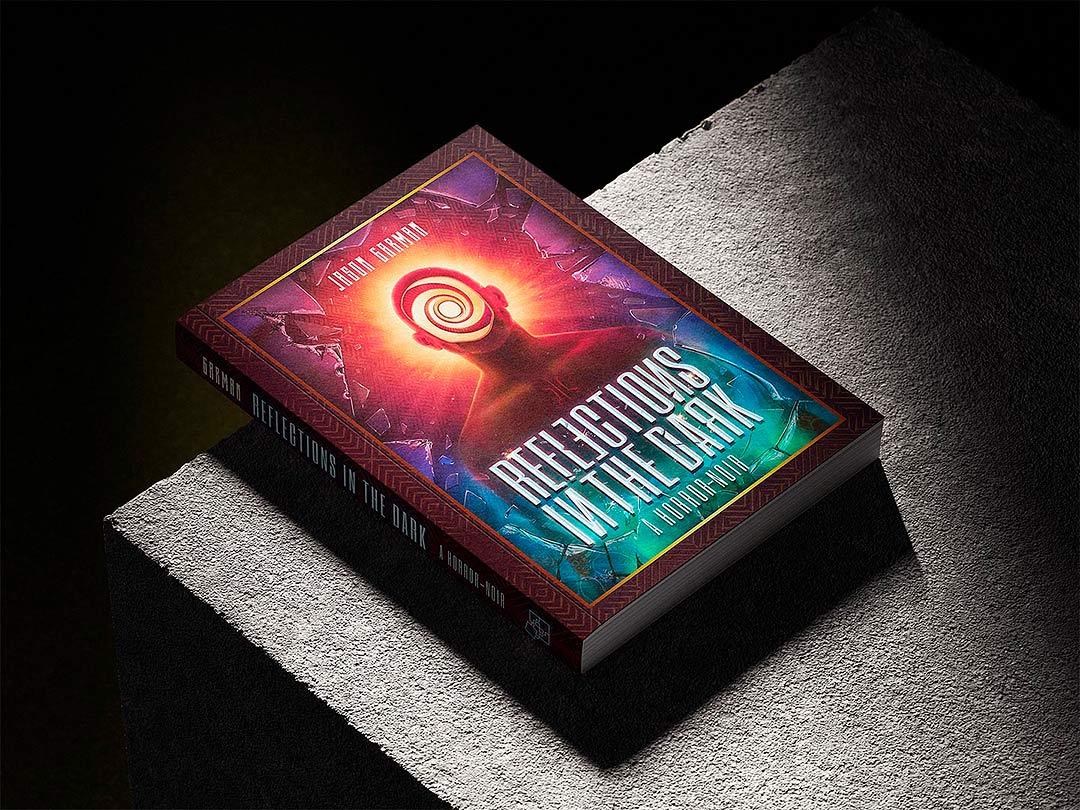
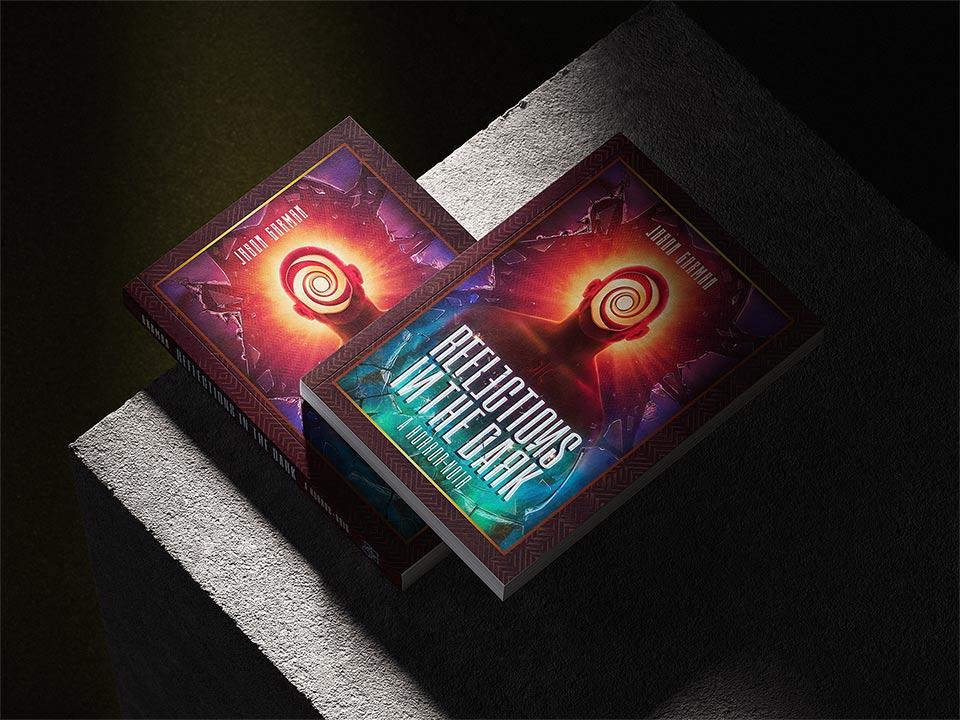
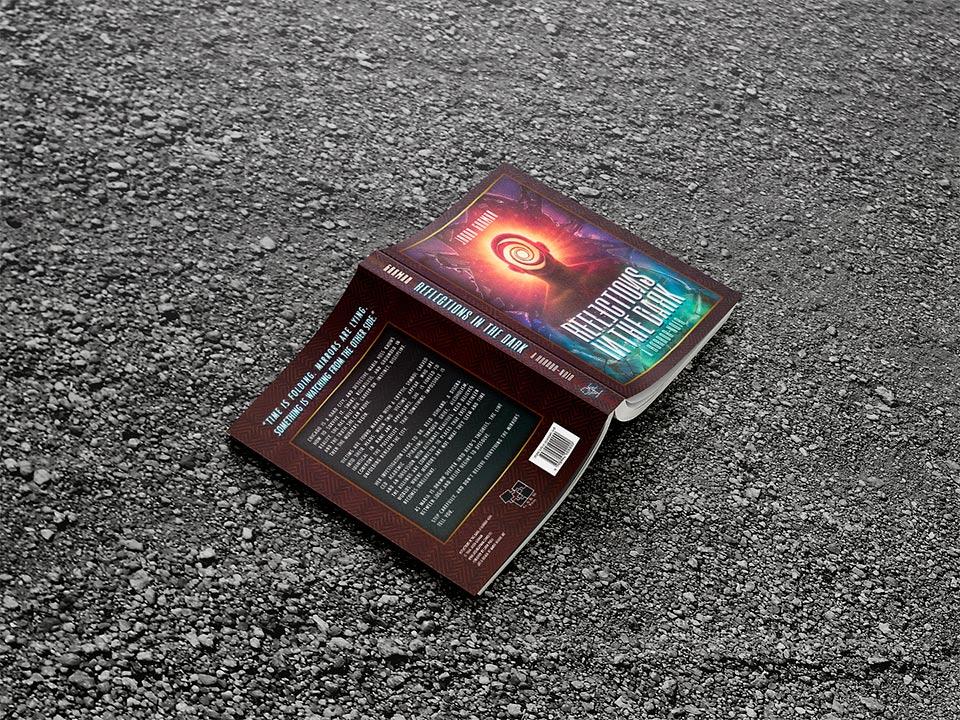
The final book cover design is calibrated to work across formats: bookstore shelves, Amazon thumbnails, ebooks and any promotional assets. It works at any size.
“I just finished going through the full presentation and I have to say that this is incredible. I absolutely love it.
Everything about the design works beautifully, and I’m genuinely thrilled with the result. The concept, the colors, the typography, and the overall composition are all fantastic. You really captured the spirit of the book and the Elsewhere Fold in a way that feels both surreal and striking.
The level of care you took—looking into the soundtrack I curated, doing market research, refining the design layout—it all went far beyond what I expected. It’s clear how much work and passion you put into every part of this.”
If you are considering hiring me for your next book cover, this is a good place to get a feel for what it’s like to work with me. I’ve compiled the full book cover design process behind Reflections in the Dark into a downloadable PDF that includes client’s brief, market research, mood boards, concept sketches, 3D development stages, typography explorations, market positioning and client presentations.

Hey! I’m Mario Nevado, and I’ve spent the last 20 years turning good stories into covers that haunt, seduce and sell — for indie authors, major publishers and everyone in between.
Every cover I design starts with the same question: what makes this story impossible to ignore? If you need that answer on your next release, I’ve got you covered.
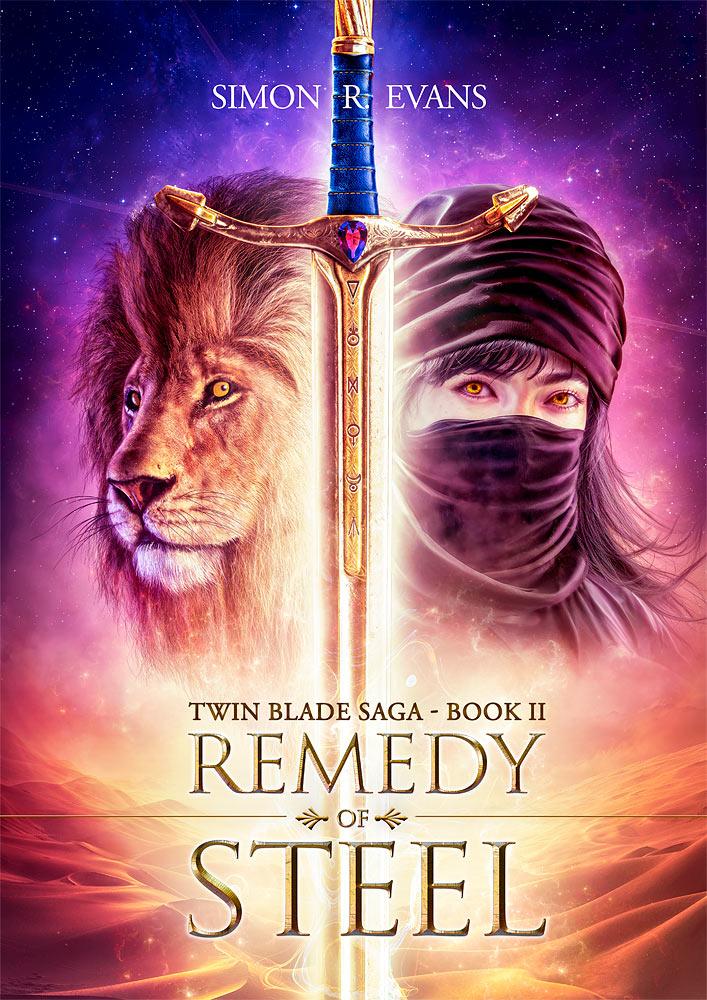


Let’s talk about your next album, publication or film.
If you are looking to hire a freelance artist for your next project, don’t hesitate in reaching me for availability and quotes. My areas of expertise are cover artworks, editorial projects, music album packagings and film poster design – but not limited to them! Please, while requesting a quote for your project, be as specific as possible: number of elements, illustrations or pages, estimated print run, preferred date of delivery and if you’re on a budget, just let me know it and we will try to work something out, if possible.
Feel free to contact me if you would like me to perform in your next design festival, give a lecture or a workshop in your area, if you’re arranging a group or solo exhibition or if you want to invite me to your podcast or magazine for an interview. Chances are that I’d love to participate in any of those!
Please, allow me 24 hours to reply to your message. Remember to contact me at least 2-3 months prior to your release date, as my schedule might be (and usually is) full.
But if you are just an art appreciator, feel free to ask me any questions you might have about my art for your personal enjoyment: I’ll do my best to clear any doubts you might have about my body of work 🙂
Say hello at hey@marionevado.art or contact me via social media: